
Drifting off to rain sounds, reading a few pages or drawing before bed: discover how a handcrafted rain pillar can...
shopping_cart
Cart
0

Drifting off to rain sounds, reading a few pages or drawing before bed: discover how a handcrafted rain pillar can...

From ancient shamanic rituals in Atacama and West Africa to modern French precision lutherie, explore the history,...

Meditation is based on a specific quality of attention that is often misunderstood. It is not about clearing the mind...
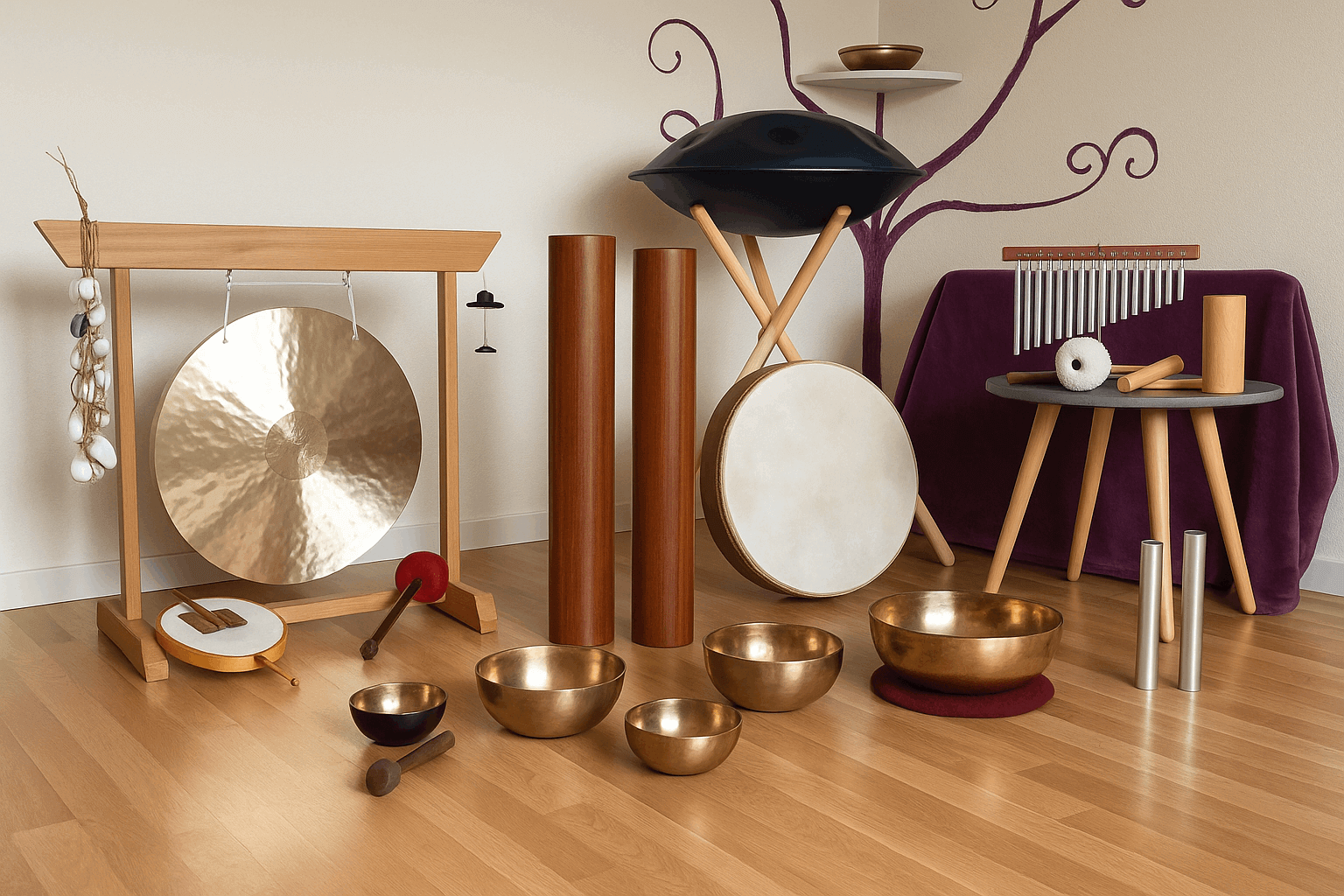
Sound therapy, relaxation and vibrations: discover how the Rain Pillar can accompany sound baths, meditation and...

In the workshop, every rainstick is born from a precise gesture and patient listening. From the wood processing to...

Elevate the guest experience at your luxury spa, hotel, or high-end boutique with our French artisanal rainsticks. An...
There is something comforting about hearing rain fall when you are settled at home. A few drops against a window, water rustling through leaves… These familiar sounds can make you want to slow down.
To recreate this atmosphere before bed, a handcrafted rain pillar produces several minutes of continuous rainfall sound, without a screen or recording. It can accompany reading, a moment of rest or a story shared with a child.
Here are some ways to bring rain sounds into your evening routine, according to your habits and listening preferences.
Imagine light rain falling on the leaves of a tree.
The drops follow one another and blend into a continuous rustle, with subtle variations. Nothing repeats in exactly the same way, yet the overall sound has a certain regularity.
This sets rain apart from many everyday sounds. There are no words to follow and no melody to recognise. You can listen closely or let it become less noticeable, depending on the moment.
For some people, this regularity helps create an atmosphere that feels relaxing.
Rain also brings back memories: an evening indoors during a shower, a garden after a storm, a walk in the woods or simply the pleasure of being at home while it rains outside.
These associations are personal. They partly explain why some people particularly enjoy this atmosphere, while others prefer silence.
Our days are often full of demands: conversations, travel, messages, screens and various activities.
In the evening, we sometimes keep going at the same pace without giving ourselves a transition.
Listening to gentle rain offers another possibility. You can simply settle down and pay attention to the sound, without following a relaxation session or mastering any particular technique.
Your mind can wander freely. You listen for a while, then the sound naturally fades into the background.
This simplicity is part of the appeal of relaxing with sound at home: everyone can enjoy the experience in their own way.
Many people enjoy rain sounds at bedtime. A gentle soundscape may feel pleasant, reassuring or familiar.
This does not mean that the sound of rain has a proven medical effect on sleep.
Research into continuous sounds, including white noise, has produced mixed results. It does not establish that rain consistently improves the process of falling asleep or sleep quality.
Sleep hygiene recommendations do, however, encourage quiet evening activities and fewer stimulating activities before bed.
Listening to rain can fit into this approach, provided the sound is pleasant and suits each person's sensitivity.
For some people, it offers a relaxing break before going to bed. For others, it accompanies the first few minutes of sleep.
What matters is enjoying the listening experience, without feeling that you have to fall asleep quickly.
This is probably one of the simplest and most personal ways to use a rain pillar.
After a long day at work, you settle comfortably onto the sofa to unwind. As evening falls, bedtime approaches. The bedroom is quiet, and the lighting is soft and subdued. Before getting under the covers, gently turn over your rain pillar and place it on a stable surface near the bed, where it cannot fall.
The sound begins to flow. You lie down, close your eyes and listen to the succession of drops. At first, your attention follows their rustling sound. Gradually, you settle into rest without trying to follow the course of the rain.
Sometimes, you fall asleep before the rain pillar has finished its sound cycle.
This is something we do ourselves and have also heard about from other users of our instruments. It illustrates one of the rain pillar's advantages: producing a continuous sound for several minutes without further intervention once it has been set in motion.
Unlike a traditional rainstick, which needs to be turned repeatedly to prolong the sound, a rain pillar continues its flow naturally until the end.
The experience naturally varies from person to person. Some may fall asleep quickly while listening; others will simply enjoy the moment before returning to silence, or turn the instrument once or twice more before gradually drifting off.
The pleasure remains the same: settling comfortably and letting the rain accompany the start of the night.
A rain pillar can also accompany a relaxing moment before going to bed.
There is no need for a long session. Five, ten or fifteen minutes can be enough to create a pleasant pause in your evening.
Soft lighting, a comfortable armchair or a few cushions can be enough to create a small space to unwind.
Some people prefer to stay in the living room; others settle in their bedroom.
The important thing is to choose somewhere you feel comfortable, with few interruptions and a soundscape that does not disturb anyone else at home.
You can also use this moment to put down your phone and enjoy a screen-free activity.
Imagine an ordinary evening.
You are sitting in your armchair with a book. You turn over your rain pillar, then quietly return to reading.
The rain flows nearby. It accompanies the pages as you turn them, without constantly demanding your attention.
You can also choose to do nothing: close your eyes for a few moments, listen to the changes in the sound or simply sit comfortably.
This pause before bed needs no special preparation.
Over time, it can become a pleasant habit, a moment you naturally return to at the end of the day.

Children can also enjoy natural soundscapes, particularly when they accompany an activity they like.
A rain pillar can fit into different moments of their day: before bed, during a quiet activity or at nap time.
After a day of school, games and activities, some children need a little time to settle down.
Why not offer them five, ten or fifteen minutes to draw, colour, read or look through a book?
An adult sets the rain pillar in motion, and the child settles down with their pencils, notebook or chosen story.
The sound of rain accompanies the activity without any particular instructions.
The child can listen to the drops for a moment, then naturally return to drawing or reading.
Over time, this little routine can become a familiar part of the evening: the point when livelier activities give way to a quieter atmosphere.
Some children may enjoy this atmosphere when they want to concentrate or settle down. Others will prefer silence. The idea is to offer an experience and respect their preferences, without expecting an automatic effect on attention.
The sound of rain can also accompany the transition to sleep.
Before a nap, for example, an adult can spend a few minutes reading a story, then set the rain pillar in motion.
The child settles down to rest while the sound continues to flow gently.

They may fall asleep before the rain ends, or simply enjoy this atmosphere during the first few minutes of rest.
This use can also fit into a bedtime routine alongside established family habits.
A rain pillar is nevertheless a handcrafted instrument, not a toy. Around children, it must be handled by an adult and placed on a stable surface, out of their reach and away from the bed, particularly during naps or at night.
There are many ways to listen to rain at home today.
Recordings offer a choice of atmospheres: fine rain in a forest, drops against a window, a shower on a roof or a flowing stream.
They are convenient and readily available on a phone, speaker or computer.
A rain pillar offers a different experience.
Inspired by the principle of a traditional rainstick, this instrument produces a natural acoustic sound as small elements gradually travel through its internal structure.
Simply turn it over gently to start a rainfall sound lasting from 5 to 60 minutes, depending on the model.
No speaker, electricity or recording is needed.
The movement is part of the experience. You pick up the instrument, turn it over and let the rain take its course.
The flow is continuous, with variations that give the sound its distinctive character.
A handcrafted rain column is also an object that can become part of your interior décor.
To understand its design and operation, explore the rain pillar concept and the stages of making a handcrafted rain pillar.
Your choice mainly depends on the listening time you want, the sound presence you prefer and the setting in which the instrument will be used.
In a quiet bedroom or living room, the compact models are particularly worth considering.
At 48 cm tall, the 5-minute rain pillar is the smallest model in the collection.
Its light, crystalline sound suits quiet surroundings and individual listening.
It can accompany a short pause before bed, reading or a few minutes of rest once you are settled in bed.
Its size also makes it an option for children's quiet moments, under adult supervision.
The 8-minute rain pillar is 58 cm tall and produces a clear, steady and slightly more present sound.
It suits people who want to listen for longer without moving to a much larger instrument.
Its duration can be enjoyable for an evening routine, a quiet activity or a relaxing moment shared by two people.
For those who enjoy a longer listening experience, the 15-minute rain pillar is another option.
It has a fuller sound presence and a larger format. It can suit a living room or a sufficiently quiet space, provided its sound suits the setting.
A longer duration is not automatically better, however. In a small, quiet bedroom, five minutes of gentle rainfall may be all you need.
To compare the characteristics, durations and uses of the different models, see our guide to choosing a rain pillar.

Start with a moment you already enjoy and add a short listening session. Simply notice whether you like the atmosphere, whether the sound suits the room and whether you want to return to it the next evening.
When choosing your rain pillar, consider its sound, size and ease of handling as well as its duration. A five-minute model may meet your needs; listening for longer is a preference, not a goal.
Sound therapy and rainsticks: the power of natural sounds to soothe body and mind
Rain column and meditation: a natural sound support for mindfulness
check_circle
check_circle