
From ancient shamanic rituals in Atacama and West Africa to modern French precision lutherie, explore the history,...
shopping_cart
Cart
0

From ancient shamanic rituals in Atacama and West Africa to modern French precision lutherie, explore the history,...

Meditation is based on a specific quality of attention that is often misunderstood. It is not about clearing the mind...
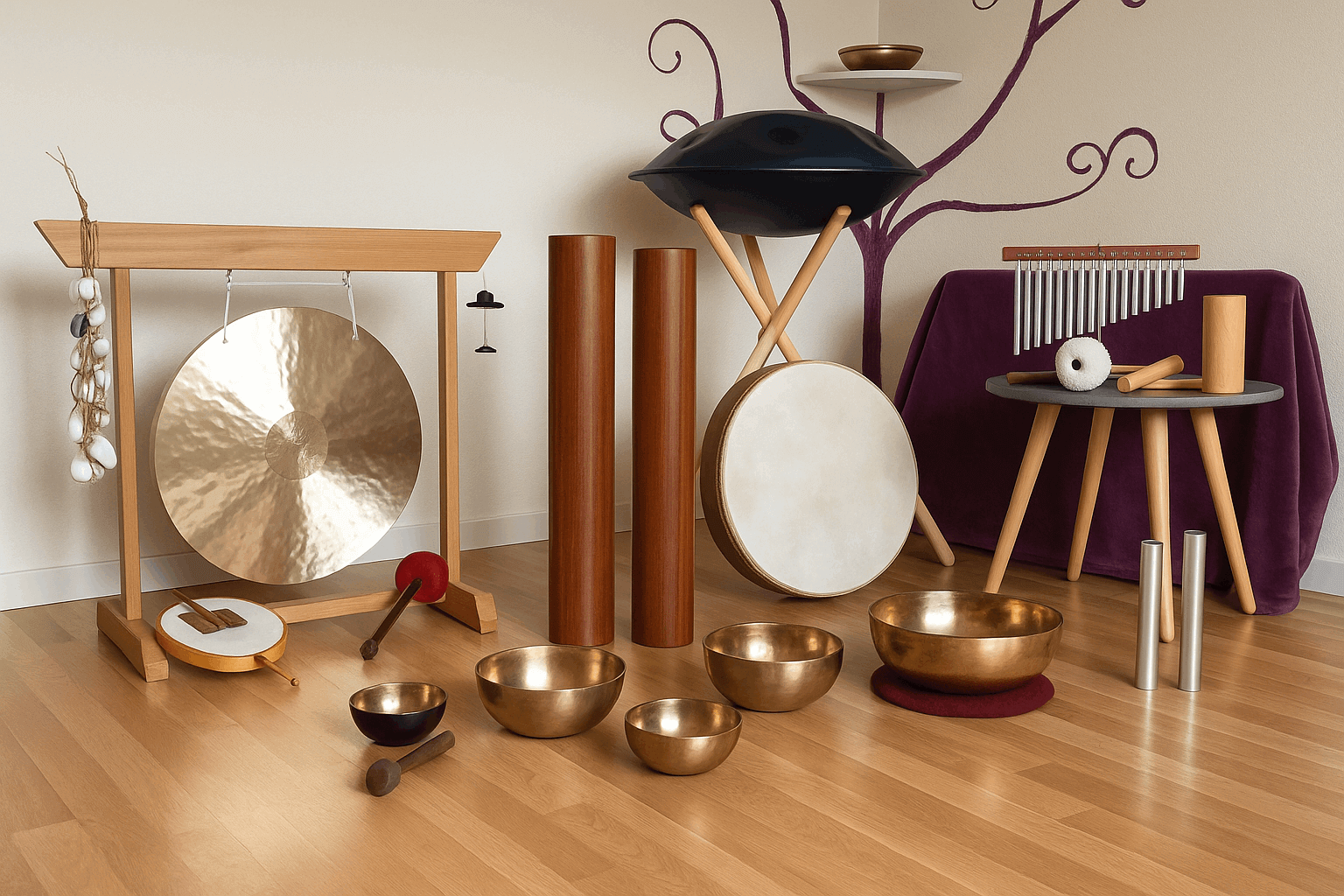
Sound therapy, relaxation and vibrations: discover how the Rain Pillar can accompany sound baths, meditation and...
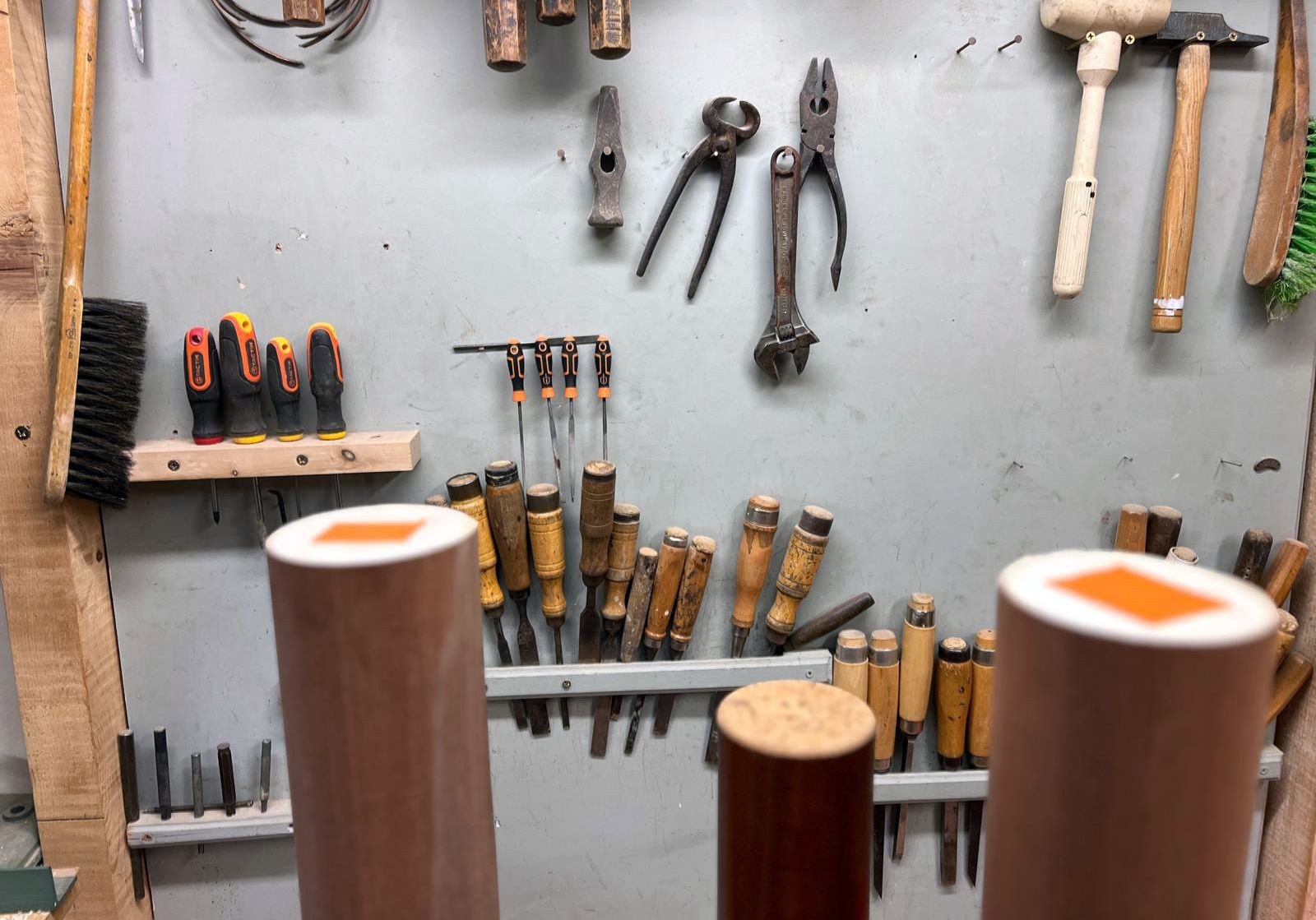
In the workshop, every rainstick is born from a precise gesture and patient listening. From the wood processing to...
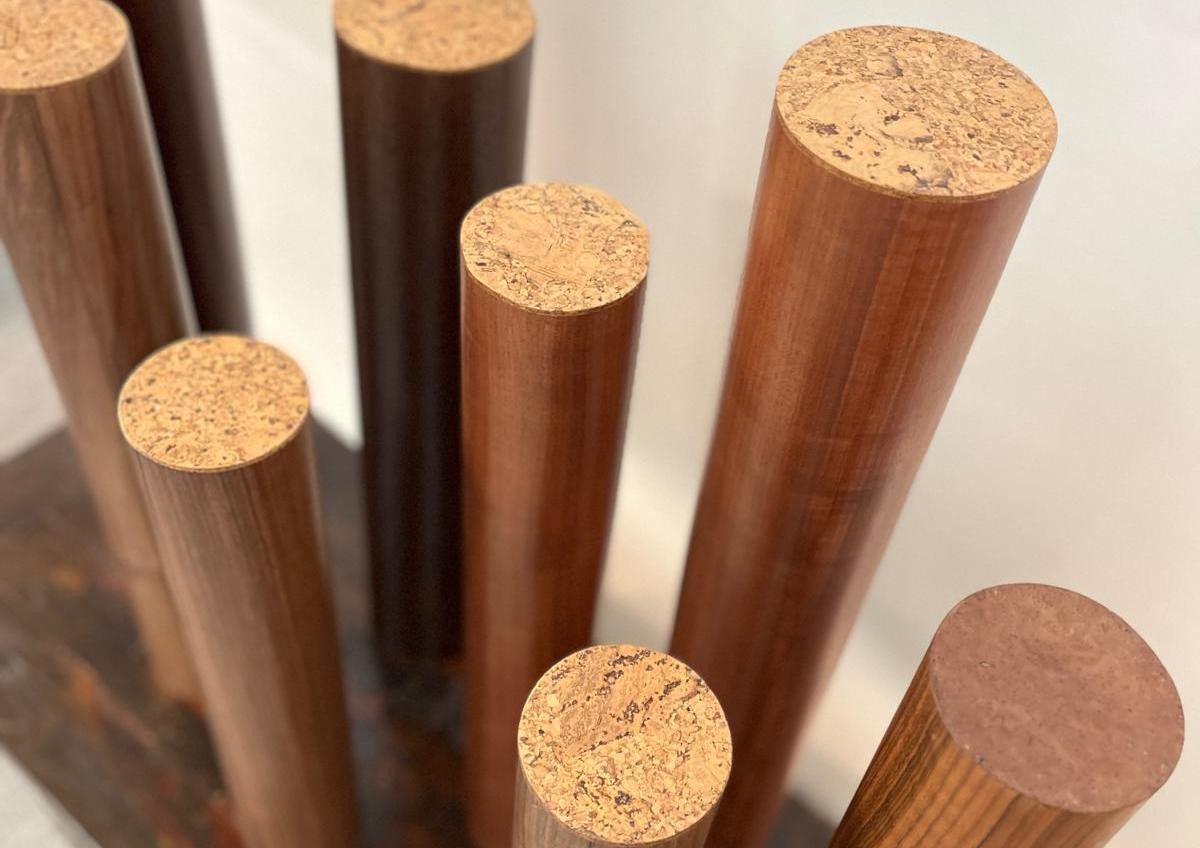
Elevate the guest experience at your luxury spa, hotel, or high-end boutique with our French artisanal rainsticks. An...
The exact origin of the rainstick is less straightforward than is sometimes claimed. Today, the instrument is strongly associated with Latin American cultures, particularly the Andean regions, where models made from dried cactus have become emblematic. However, available ethnomusicological sources call for some caution: several possible origins have been proposed, and the idea that the instrument was exclusively used to “summon the rain” partly belongs to a tradition of interpretation that is difficult to document historically.
What is much better established is its organological principle: seeds, small grains or other mobile elements move inside a closed resonating body and encounter a succession of internal obstacles. This cascade of micro-impacts produces a continuous sound that naturally evokes rainfall.
Building on this ancient principle, contemporary instruments such as the rain pillar aim to extend the duration of the flow, refine its sonic texture and transform a hand-held instrument into a genuine acoustic presence within a space.
Key points to remember:
- Organology: the rainstick belongs to the family of shaken idiophones. In the revised Hornbostel-Sachs classification used by MIMO, the rainstick is associated with vessel rattles, 112.13 — instruments in which mobile elements are enclosed within a container.
- Origins: cactus rainsticks are strongly associated with the Andean world, although the precise invention of the instrument and its original ritual function remain debated. Museum collections document historical examples from the region.
- Sound physics: the sound is created by a succession of random micro-impacts. It may share certain perceptual characteristics with broad-spectrum natural sounds; however, describing a particular instrument scientifically as producing “pink noise” would require an actual spectral measurement.
- Contemporary development: Atelier Mickaël Amant works with this principle using a wooden body, resonating elements arranged according to a precise geometry, and carefully selected seeds designed to control the continuity, texture and duration of the sound flow.
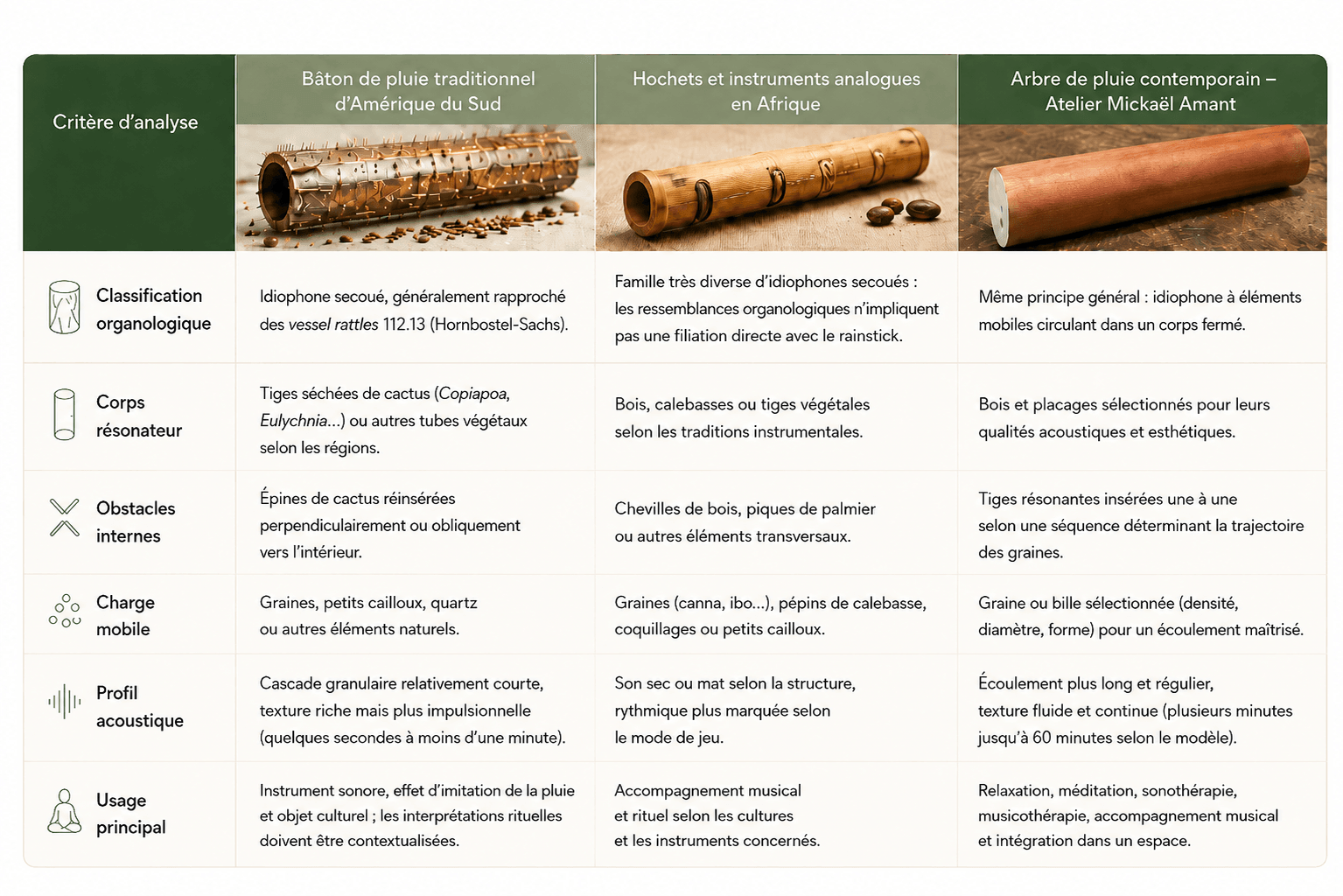
The traditional rainstick, rattles and related instruments found across different cultures, and the contemporary rain tree all rely on a comparable acoustic principle: mobile elements move inside a resonant body, producing a succession of sounds through impacts and friction.
However, their organology, materials, construction methods, and acoustic profiles can differ significantly. A traditional rainstick generally produces a relatively short cascading sound, whereas the contemporary rain tree developed by Atelier Mickaël Amant is designed to create a longer, more regular, and continuous sound flow, lasting up to 60 minutes depending on the model.
These acoustic or organological similarities do not necessarily indicate a shared historical origin. Seed rattles and other instruments based on mobile elements enclosed within a resonant body are found in many cultures, partly because they rely on a relatively simple and universal acoustic principle.
Today, the rain tree can therefore be used in a wide range of contexts, including relaxation, meditation and mindfulness practice, yoga, musical creation, sound therapy, music therapy, immersive sound experiences, and the design of wellness-oriented spaces.
Discover our handcrafted rainsticks and rain pillars, designed and made in France for continuous rain sounds lasting from a few minutes to extended listening sessions.

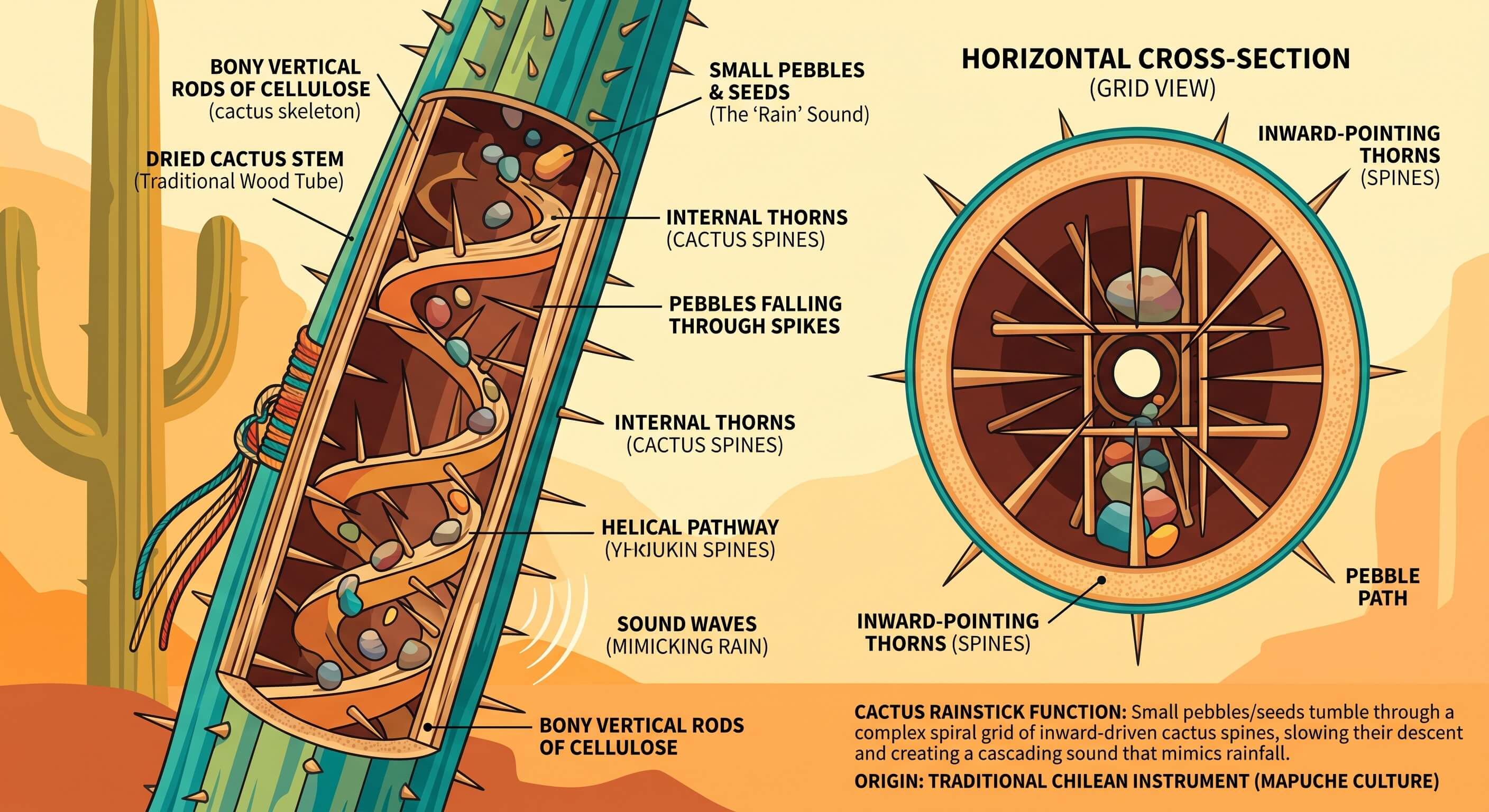
The modern image of the rainstick is closely linked to the arid landscapes of South America. Models made from dried cactus have become the most immediately recognisable form of the instrument.
The construction principle is both simple and ingenious. A dried and hollowed plant tube forms the body of the instrument. Spines or small rigid elements are inserted through its walls to create a succession of obstacles.
When the tube is tilted, the seeds or small grains inside do not fall directly from one end to the other. Instead, they strike and bounce against these obstacles, slowing their descent and creating a multitude of tiny impacts.
The relationship between this instrument and rituals intended to bring rain is often presented as a certainty. A more rigorous approach is to describe it as a widely circulated cultural association whose historical depth remains difficult to establish conclusively.
This nuance does not diminish the symbolic richness of the rainstick. On the contrary, it helps distinguish what museum collections and ethnographic sources can document from later narratives, contemporary uses and the symbolic associations surrounding the sound of rain.
A West African origin for the rainstick is sometimes mentioned, but at present it remains difficult to support with sufficiently precise ethnographic documentation.
This does not mean, of course, that Africa is unfamiliar with shaken idiophones. Quite the opposite: the continent has an extraordinary diversity of rattles, gourds, seed instruments and other forms of percussion based on mobile elements.
It is therefore more accurate to speak of organological analogies than to claim a direct historical lineage.
This distinction matters in ethnomusicology: societies far removed from one another can independently develop similar acoustic solutions. A seed enclosed within a hollow body naturally produces sound when moved, which explains why the principle of the rattle has appeared in many parts of the world without requiring a single common point of origin.
From a physical point of view, the sound of a rainstick is produced by a granular cascade. Each seed or mobile particle successively encounters several obstacles, generating a series of extremely short impacts.
Individually, these impacts would barely be noticeable. But when dozens or hundreds of moving elements produce them simultaneously, they overlap and form a continuous sonic texture.
The term pink noise refers in acoustics to a signal whose power decreases approximately according to a 1/f relationship. Unlike white noise, which distributes equal power per unit of frequency, pink noise places proportionally more energy in the lower-frequency range.
Acoustic Energy Density (Pink Noise)
Energy
▲
│█████
│ █████
│ █████
│ █████
└─────────────────────────► Frequency (Hz)
(3 dB decrease per octave)
It can therefore be tempting to describe the sound of a rain pillar automatically as “pink noise”. From a scientific point of view, however, an important distinction must be made: an acoustic instrument is not a calibrated electronic noise generator.
Its spectrum is influenced by many factors:
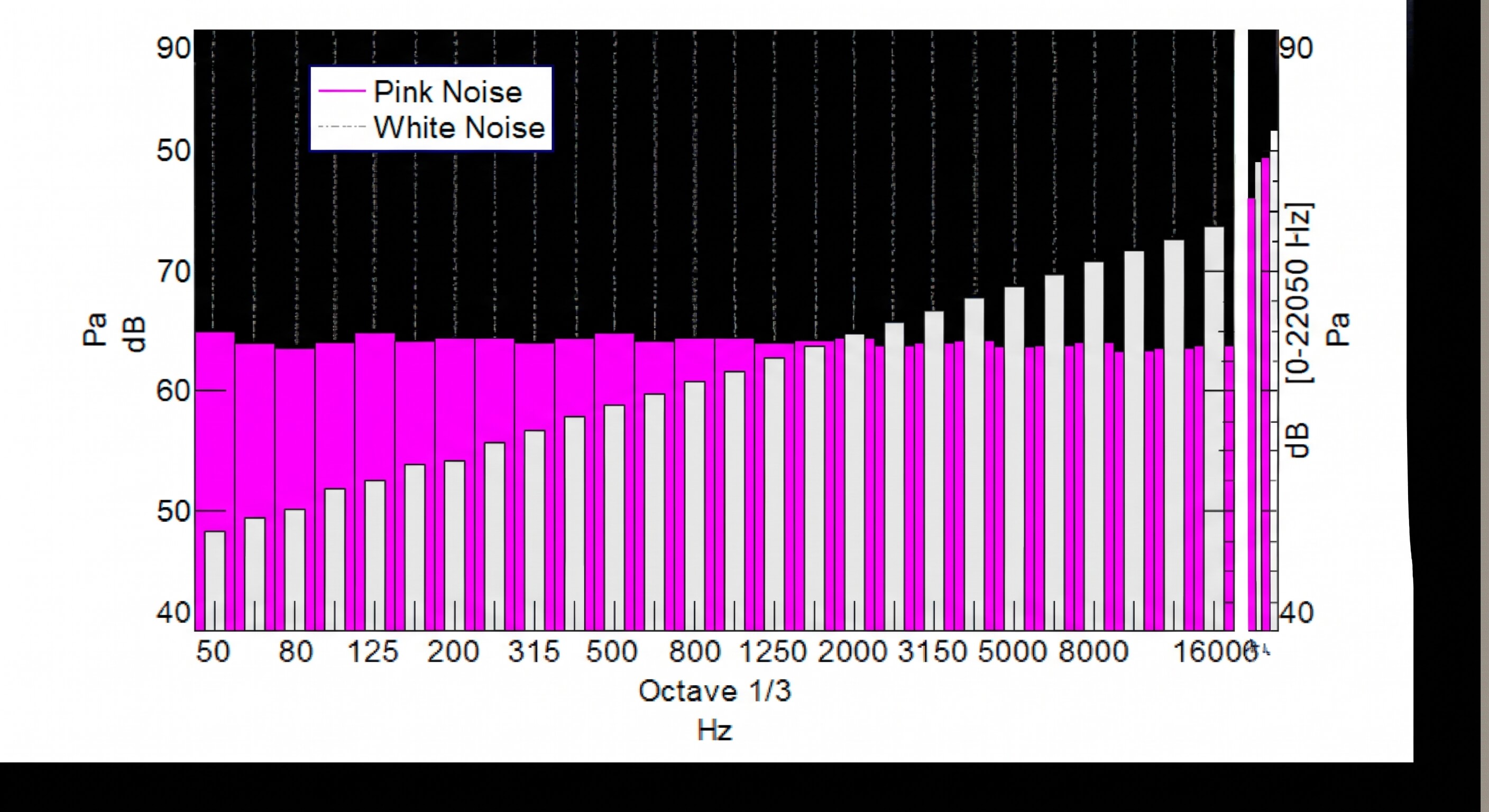
To determine whether a particular rain pillar actually produces a spectral distribution close to pink noise, the instrument would need to be recorded under controlled conditions and subjected to spectral analysis.
This opens up an especially interesting area for future study: different rain pillar models could be compared objectively, linking construction choices to their measurable acoustic signatures.
Continuous sounds reminiscent of rainfall, flowing water, or other natural soundscapes are widely used to create an atmosphere that supports relaxation, focus, meditation, and rest. This helps explain the growing interest in the rainstick and rain pillar for practices such as meditation, yoga, sound relaxation, mindfulness, and immersive sound experiences.
However, it is important to distinguish between a subjective feeling of relaxation and a medical or physiological claim.
Research into white noise and pink noise has produced interesting but still mixed results. A systematic review examining different forms of sound stimulation during sleep concluded that the available evidence was not yet strong enough to demonstrate a consistent overall benefit. More recent studies also suggest that the effects of pink noise can vary significantly depending on sound level, listening conditions, individual sensitivity, and the protocol used.
It would therefore be inaccurate to claim that a rain culumn automatically produces alpha brain waves, lowers heart rate, improves sleep, or induces a specific physiological state.
What can be said more reliably is that the rain pillars continuous, gentle, and low-event sound flow can provide a soothing acoustic background for activities focused on calm, attention, relaxation, meditation, or sensory immersion.
This is precisely where the rain pillar instrument finds much of its appeal today: at the intersection of acoustics, natural sound, sensory perception, mindfulness, and personal experience.
For people looking for a natural relaxation sound, a meditation sound instrument, or an acoustic environment inspired by rainfall, the rain tree offers an immersive listening experience without requiring exaggerated therapeutic claims.
The traditional rainstick is designed to be held, tilted and regularly turned over. Its sound production therefore depends directly on the gesture of the person playing it.
The contemporary rain pillar retains the same fundamental physical principle but changes its scale and purpose. The aim is to slow the movement of the internal elements much more significantly in order to produce a longer, steadier and more autonomous sound flow.
At Atelier Mickaël Amant, this evolution is not simply a matter of making a larger rainstick.
It involves genuine work on:
The workshop’s construction process includes the individual insertion of resonating rods and the selection of seeds according to factors such as density, diameter and shape.
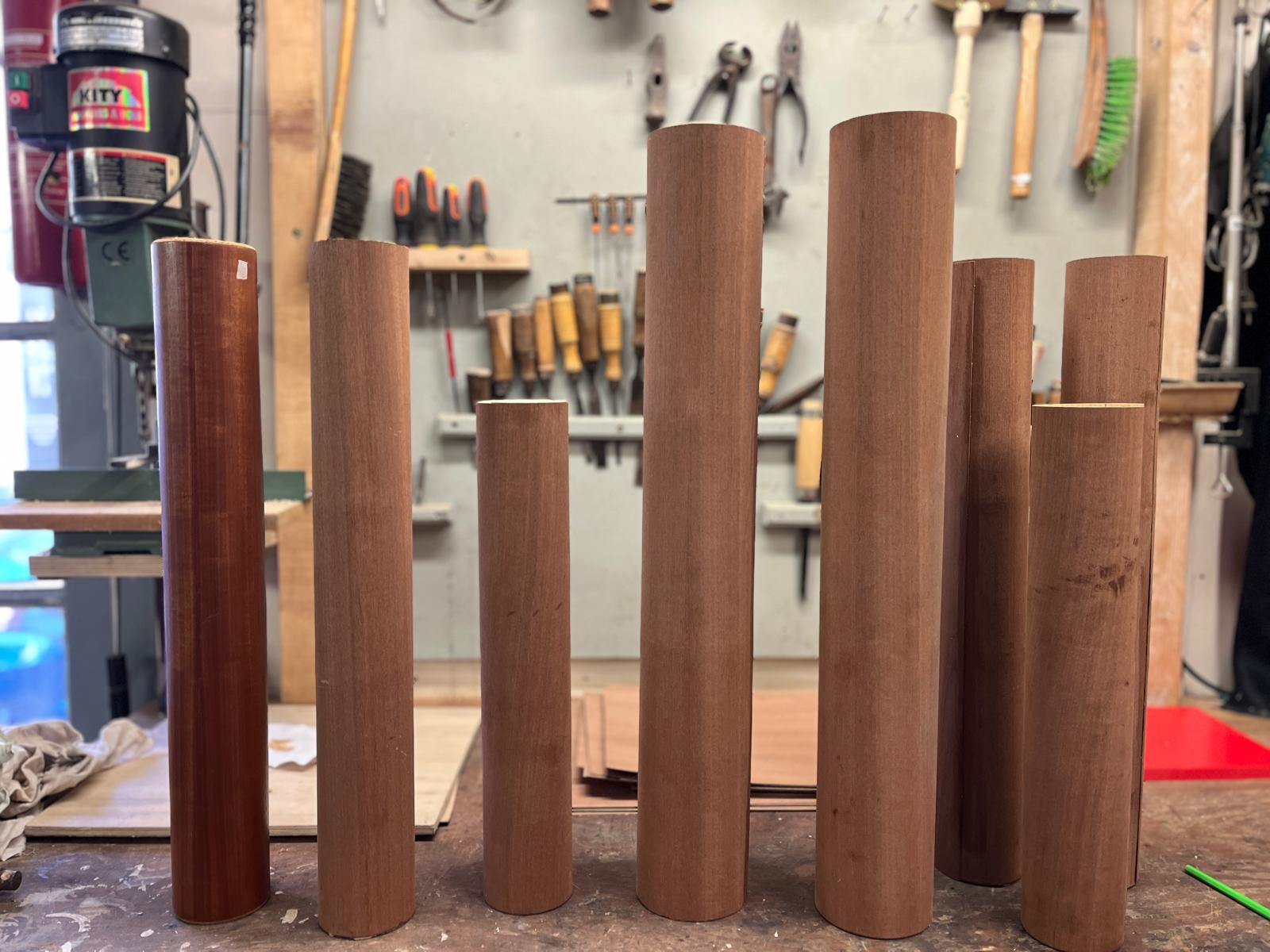
This transformation explains why the expression rain pillar should not simply be treated as another name for a rainstick.
The two instruments share the same fundamental acoustic principle, but differ in their scale, sound duration, degree of autonomy, mode of use and relationship with the surrounding space.
A rainstick is handled in order to create a sound effect.
A rain pillar is designed to let the sound unfold.
A rainstick is generally a tubular instrument held in the hands and tilted so that seeds or small grains move through a succession of internal obstacles.
A rain pillar takes the same basic principle into a larger format, with an internal architecture designed to slow the flow considerably. This allows it to produce a prolonged rainfall sound without constant handling and makes it suitable as an instrument, a relaxation aid or a sound object integrated into a space.
It is difficult to attribute the invention of the rainstick with certainty to a single people or historical period.
Cactus rainsticks are strongly associated today with the Andean world and South America, and museum collections document historical instruments from the region.
Other hypotheses, including possible links with West Africa, have also been proposed. However, the available documentation does not currently allow a direct historical lineage to be established with certainty.
There is no single construction method.
At Atelier Mickaël Amant, the design combines woodworking and selected veneers, internal resonating rods and carefully chosen seeds that form the mobile filling of the instrument.
Their arrangement and characteristics directly contribute to the texture, continuity and duration of the sound.
Materials, dimensions and finishes vary according to the model, so each individual product page remains the best reference for its precise specifications.
check_circle
check_circle